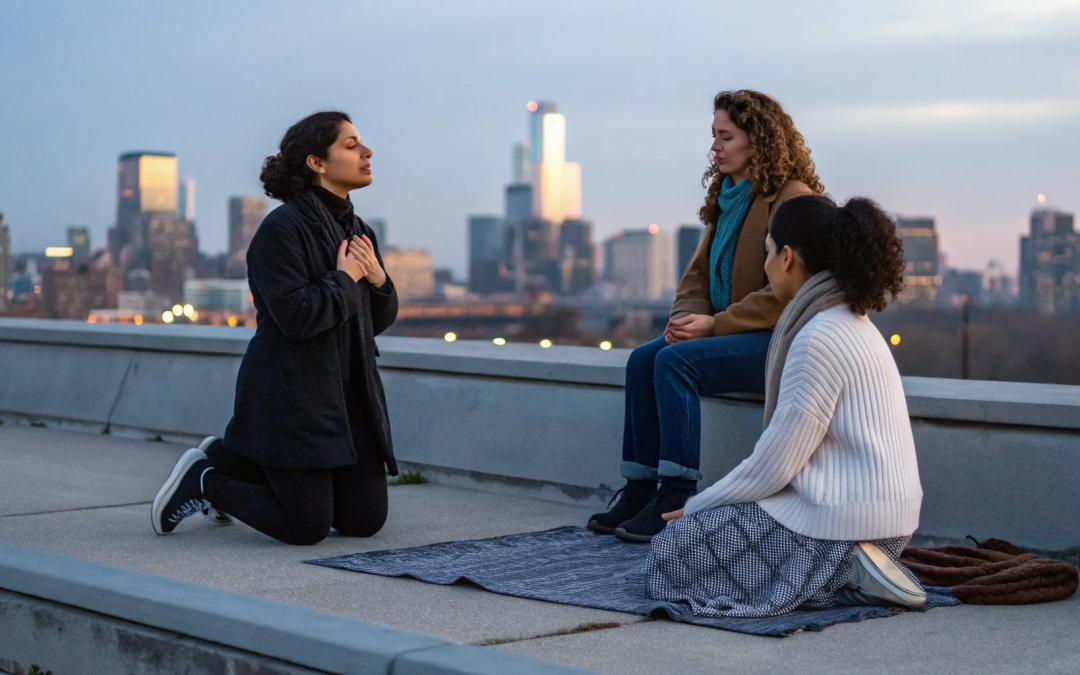
That quiet, persistent feeling that something wasn’t right? Listening to that voice and choosing to leave the church was an act of courage. But after years of looking to external authorities for answers, learning to trust your own spiritual instincts can feel disorienting. Where do you go from here when you are your own guide? This journey is about turning inward and discovering that you have always had a direct line to the Divine. It’s the very heart of spiritual healing for women who left the Catholic Church. This guide will help you quiet the outside noise and amplify your own inner wisdom, creating a faith that is authentically yours.
Key Takeaways
- Leaving the church can be an act of faith: It’s not about losing your spirituality; it’s about seeking a more honest and direct connection with the Divine when an institution no longer feels like home.
- Healing means separating God from the institution: Your journey is about releasing the guilt and rules you were taught, allowing you to build a personal relationship with a loving Divine presence on your own terms.
- You get to create your own spiritual practice: You can find connection and community in new ways, such as through virtual circles, working with a spiritual teacher, or developing personal rituals that feel meaningful to you.
Why Women Leave the Church (And Why It’s Okay)
Walking away from the church you grew up in is one of the hardest things you can do. It’s not just a building or a Sunday routine you’re leaving behind; it’s a community, a belief system, and often, a core piece of your identity. If you’ve made this choice, or are thinking about it, please know you’re not alone. So many women are quietly untangling themselves from religious structures that no longer feel like home. This departure isn’t a failure or a sign that you’ve lost your faith. In fact, it’s often an act of profound spiritual integrity.
It’s a signal that your soul is calling for something more, something truer and more aligned with your own inner knowing. You might be leaving because the institution’s actions don’t match its teachings, because you feel constrained by outdated rules, or simply because you feel invisible. Whatever your reasons, they are valid. This path away from the church doesn’t have to be a path away from God. For many, it’s the first step toward a more direct, personal, and deeply healing relationship with the Divine. It’s the start of coming home to yourself.
Grappling with Scandal and Disillusionment
For many women, the decision to leave begins with a deep sense of disillusionment. You look at the institution meant to represent divine love and see hypocrisy, power struggles, and painful scandals. When you hear about widespread abuse crises or see leaders fail to live up to the principles they preach, it creates a crack in the foundation of your trust. It’s heartbreaking to realize the place you turned to for spiritual guidance has become a source of pain for so many. This isn’t just a minor disagreement; it’s a fundamental conflict that makes it feel impossible to stay. As many who have left the church share, this feeling of being let down by organized religion is a powerful catalyst for seeking a spiritual path elsewhere.
Feeling Limited by Teachings on Gender and Autonomy
It’s hard to feel spiritually expansive in a place that puts you in a box. Many churches continue to promote teachings on gender that feel limiting and outdated. You may be told that women can’t be leaders, that your primary role is to be a wife and mother, or that your voice is less important than a man’s. These messages can create a painful internal conflict, especially when your own spirit knows you are powerful, capable, and whole. It’s no surprise that a recent analysis found that two-thirds of Millennial and Gen Z women feel that churches don’t treat men and women equally. When the institution you belong to refuses to see your full worth, leaving is an act of self-respect.
The Pain of Feeling Unseen or Marginalized
A church is supposed to be a community of unconditional love and acceptance. But for many, it becomes a place of judgment and exclusion. If your life doesn’t fit the expected mold, whether because of your marital status, your career, your questions, or who you love, you can be made to feel like an outsider. The constant pressure to conform can be exhausting, and the quiet loneliness you feel in a full sanctuary is a unique kind of pain. You deserve to be in a community where you are celebrated, not just tolerated. Choosing to leave a place where you feel unseen isn’t abandoning community; it’s making space to find one where you can finally, fully, and unapologetically be yourself.
What Spiritual Healing Looks Like Outside the Church
Stepping away from the church can feel like standing at the edge of a vast, unknown territory. It’s a space of immense freedom, but it can also be disorienting. For so long, your spiritual path was mapped out for you. Now, you hold the compass. This is your chance to redefine what faith, connection, and the Divine mean to you, separate from doctrine and dogma. Spiritual healing outside the church isn’t about erasing your past or abandoning spirituality altogether. Instead, it’s a beautiful, intentional process of reconstruction. It’s about sifting through what you were taught, keeping what resonates with your soul, and lovingly letting go of what doesn’t.
This journey is deeply personal. It’s a shift from seeking approval from an institution to cultivating a direct, personal relationship with a loving God. It’s about trading fear-based rules for spiritual practices that genuinely nourish and support you. As you begin to walk this new path, you’ll find that healing touches every part of your life. It involves untangling your identity from the church, releasing years of accumulated guilt, and learning to trust your own inner wisdom. This is your homecoming to yourself and to a Divine love that was never confined by walls. With a guide like Mark Anthony Lord, you can find spiritual solutions that honor your truth and help you build a spiritual life that feels like home. This path is about discovering that you are, and always have been, whole and holy.
Heal Your Relationship with God, Not Abandon It
When you leave the church, it’s common to question everything, including the existence of God. Many people find peace in atheism or agnosticism, and that is a perfectly valid path. However, there is another option: you can choose to heal your relationship with the Divine, not abandon it. This means separating the idea of God from the institution, rules, and human interpretations that may have caused you pain. It’s an invitation to meet God on your own terms, to discover a loving, infinite presence that exists beyond any building or book. This is your opportunity to build a connection that feels personal, supportive, and true to your own experience, free from judgment. The Spiritual Awakening Circle offers a safe space to explore this new relationship.
Let Go of Guilt, Shame, and Religious Trauma
Many of us carry a heavy weight of guilt and shame from our time in the church, and it can linger long after we’ve left. These feelings can close off our hearts and keep us stuck in cycles of self-criticism. But as you’ve probably realized, healing can’t start if your heart is closed off. The first step is giving yourself permission to feel everything without judgment and then choosing to let it go. This isn’t a passive process; it requires active self-compassion and forgiveness. It’s about recognizing that you did the best you could with what you knew. For deep-seated wounds, working with a guide through Channeled Spiritual Healing Sessions can help you release this emotional baggage and finally feel free.
Your Healing Is Valid, With or Without the Church’s Approval
Leaving a community you’ve known your whole life is a brave act, and it can be scary to go against the grain. You might worry about what others think or feel a sense of loss for the community you left behind. Please hear this: your healing journey is valid, whether or not anyone from your past understands or approves of it. You don’t need permission from the institution you left to build a spiritual life that feels authentic and fulfilling. True spiritual authority comes from within. As you learn to trust your own instincts, you’ll find that joy, purpose, and deep connection are available everywhere. You can find inspiration and community in many forms, from nature to creative pursuits to new spiritual groups you can find on platforms like YouTube.
The Emotional Realities of Leaving
Walking away from the church is a profound act of self-honoring, but it doesn’t always feel that way at first. The path forward is often layered with complex emotions that can be surprising and intense. It’s not just about leaving a building or a set of beliefs; it’s about untangling your identity from a structure that may have shaped your entire life. Acknowledging these emotional realities is the first step toward true healing. You are not alone in this experience, and every feeling that comes up is a valid part of your journey back to yourself and to a spiritual connection that feels like home.
Grieving the Loss of Community
For many of us, the church was more than just a place of worship; it was the center of our social lives. Leaving can mean losing friends, mentors, and the comfort of familiar rituals. It’s completely normal to grieve this loss. You might feel a deep sense of loneliness as you figure out where you belong now. But this emptiness also creates space for something new. Many women find fulfilling connections in book clubs, volunteer groups, or creative classes. This is your chance to build a community that sees and celebrates all of you, a place where you can be your authentic self. A virtual group like a Spiritual Awakening Circle can offer that sense of belonging with others on a similar path.
Working Through Guilt and Fear of Judgment
Guilt can be one of the heaviest burdens to carry after leaving the church. If you were raised with the idea that your church was the “one true way,” stepping away can trigger deep-seated fears of judgment, both from the people you left behind and from God. Please hear me when I say this: that guilt is not a spiritual truth. It is a conditioned response. You have not failed or done something wrong by choosing a path that aligns with your soul. Working through these feelings is a critical part of your healing. A channeled spiritual healing session can help you release these old energies and reconnect with the unconditional love of the Divine.
Redefining Who You Are Spiritually
Leaving the church doesn’t mean you have to abandon your spirituality. In fact, it’s often the beginning of a much deeper and more personal spiritual life. This is your invitation to get curious. What do you truly believe? Some women explore other denominations that feel more inclusive, while others are drawn to practices like meditation, yoga, or connecting with nature. There is no right or wrong way to do this. You get to redefine your relationship with God on your own terms. This journey is about discovering what practices and beliefs make you feel connected, expansive, and whole. It’s about finding a spirituality that fits you, not forcing yourself to fit into a spiritual box.
Learning to Trust Your Spiritual Instincts Again
One of the most challenging parts of this process can be learning to trust yourself again. Organized religion often teaches us to seek answers from external authorities like priests or sacred texts, sometimes at the expense of our own inner wisdom. Your intuition may have been quieted for a long time, but it never left you. The key is to take your time. There’s no rush to have it all figured out. Allow yourself to explore different ideas and practices without any pressure to commit. Your inner guidance is like a muscle. The more you listen to it and act on its gentle nudges, the stronger and clearer it will become. This is how you begin to build a direct relationship with the Divine.
Your First Steps Toward Healing
Taking the first steps away from a familiar path is often the hardest part of the journey. Healing doesn’t happen overnight, and it’s not a linear process. It’s a gentle unfolding that begins with small, intentional actions. Be patient with yourself as you begin to process, question, and rediscover your spiritual self. The path forward is about creating a spiritual life that feels true to you, and it starts with these foundational steps.
Give Yourself Permission to Grieve
Leaving a church is more than just a change in your Sunday morning routine; it’s a profound loss. You might be grieving the community you were a part of, the comfort of familiar rituals, or the certainty of a belief system that shaped your life. This grief is real and deserves to be acknowledged. Allowing yourself to feel the sadness, anger, or emptiness is an essential first step toward healing. It’s okay to miss parts of your old life while knowing you made the right choice for your spirit. This isn’t a sign of weakness; it’s a testament to how deeply that experience was woven into your identity.
Practice Self-Compassion and Forgiveness
Years of religious conditioning can leave behind a harsh inner critic. You might find yourself wrestling with feelings of guilt or shame for questioning your faith or walking away. Now is the time to practice radical self-compassion. Your heart has to soften before healing can truly begin. Speak to yourself with the kindness you would offer a dear friend. Forgiveness is also a key part of this process, both for yourself and for the institution or individuals who may have caused you pain. This isn’t about condoning hurtful actions; it’s about releasing their power over you so you can move forward with an open heart, ready to receive new forms of love and guidance.
Use Journaling and Meditation to Heal
When you leave a structured religion, the silence can feel overwhelming. Journaling and meditation are powerful tools for filling that silence with your own inner wisdom. Journaling provides a private space to untangle your thoughts, process complex emotions, and ask the big questions without fear of judgment. It’s a way to have an honest conversation with yourself. Meditation, on the other hand, teaches you to quiet the noise and listen. It’s a practice of connecting with the Divine presence within you. You can find many guided practices on Mark’s YouTube channel to help you get started on this path of inner connection and reflection.
Find Support in a New Community
One of the most painful parts of leaving the church is the loss of community. But you don’t have to walk this path alone. It’s so important to find people who understand and support your journey. This new community might not look like your old one. It could be a book club, a yoga class, or a group of friends who accept you for who you are. For many, finding a spiritual community that honors individual truth is life-changing. A group like the Spiritual Awakening Circle offers a safe and nurturing space to explore your evolving faith with others who are on a similar journey of rediscovery and healing.
Discover Spiritual Practices That Resonate With You
One of the most beautiful parts of this journey is realizing you get to define what spirituality looks like for you. You are no longer confined to a single path or a pre-approved set of practices. This is your chance to explore, experiment, and listen to what your soul is truly asking for. Think of it as a sacred treasure hunt where the prize is a deeper, more authentic connection with yourself and the Divine. The goal isn’t to find a replacement for the church; it’s to build a spiritual home within yourself, one that feels true, loving, and expansive.
This freedom can feel a little overwhelming at first, especially if you’ve only known one way of doing things. Where do you even start? The key is to stay curious and open. Try different things. Notice what makes you feel expansive, peaceful, and connected. Pay attention to what feels like a genuine “yes” in your body, not what you think you should be doing. Your spiritual path is now yours to create, moment by moment. Below are a few starting points to help you discover what resonates with you right now.
Explore Virtual Spiritual Circles
If you’re missing the community and connection you had in church, you are not alone. We are wired for connection, and sharing our spiritual journey with others can be incredibly affirming. The great news is that you can find that sense of belonging in new ways. Many people find fulfillment in community groups, and a virtual spiritual circle can provide a safe, welcoming space to explore your faith with like-minded people from all over the world. These gatherings offer a place to be seen, heard, and supported without dogma or judgment. A Spiritual Awakening Circle can be a powerful way to receive guidance and share your experience with others who understand what you’re going through.
Work with a Spiritual Teacher or Healer
Sometimes, you need a guide to help you find your way. While some religious traditions focus on penance and rules, a true spiritual teacher helps you connect with the love and wisdom that already exists within you. Working one-on-one with a healer or mentor can provide a sacred container for your deepest questions and emotions. This is a space where you can process lingering religious trauma, ask the “forbidden” questions, and learn new tools for connecting directly with God’s love. A guide doesn’t give you the answers; they help you hear your own. Channeled Spiritual Healing Sessions, for example, offer a direct encounter with Divine guidance tailored specifically for your healing journey.
Connect with the Divine Through Nature and Creativity
You don’t always need a formal setting to experience the sacred. God is in the sunset, the rhythm of the ocean, and the resilience of a flower growing through concrete. Making time to connect with the natural world is a powerful spiritual practice. Go for a walk without your phone and just notice the world around you. Many ancient traditions, from Zen Buddhism to paganism, have long recognized the divine presence in nature. Creativity is another potent pathway. Painting, journaling, dancing, or singing can become acts of prayer, allowing you to express your soul and connect with the creative energy of the universe. It’s about finding the holy in the everyday.
Create Your Own Sacred Traditions
You now have the freedom to create rituals and traditions that are personally meaningful to you. Spiritual healing is a deep process, and building your own sacred practices is a vital step toward finding inner peace. Your new traditions don’t have to be complicated. It could be as simple as lighting a candle and setting an intention for your day, pulling a single oracle card for guidance, or creating a small altar in your home with objects that feel sacred to you. This is about consciously weaving your spirituality into the fabric of your life, on your own terms. Programs like The God Immersion Program are designed to help you build this personal, unshakable foundation for your new spiritual life.
How to Rebuild Your Relationship with the Divine
Leaving the church can feel like a breakup with God, but it doesn’t have to be. Your relationship with the Divine is deeply personal, and it can exist and flourish far beyond the walls of any institution. Rebuilding that connection is about finding what feels true and sacred to you now. It’s a journey of coming home to yourself and rediscovering the Divine presence that never left your side. This process is yours to define, and you can take it one gentle step at a time.
Finding God Outside the Church Walls
Many women leave organized religion for valid reasons, from disagreeing with church doctrine to feeling hurt by scandals or marginalized by outdated social stances. If this is your story, know that you can find immense spiritual fulfillment on your own terms. This doesn’t mean you have to give up on God; it means you get to find God everywhere. You can discover a profound connection in a quiet morning with your journal, in the unconditional love of your family, or through creative expression. Your spiritual life can be rich and meaningful as you explore new ideas and perspectives. You can find new ways to think about spirituality that resonate with your heart today, not the person you were years ago.
How a Spiritual Mentor Can Guide Your Healing
You don’t have to walk this path alone. After leaving a structured religious environment, figuring out what to believe next can feel overwhelming. A spiritual mentor can offer guidance and support without judgment, helping you untangle old beliefs and heal lingering wounds. True spiritual healing is about softening your heart and growing closer to the Divine in a way that feels authentic to you. A guide can hold space for your questions and help you listen to your own inner wisdom. Working with someone who understands this journey, like through Channeled Spiritual Healing Sessions, provides a sacred container for your transformation and helps you build a new foundation of trust with Spirit.
Take Your Next Step with the Spiritual Awakening Circle
Remember to be gentle with yourself. There is no timeline for healing, and you don’t need to have all the answers right away. The most important thing is to take your time and explore what feels right without pressure. If you’re looking for a safe and supportive space to begin, a virtual spiritual circle can be a wonderful next step. It’s an opportunity to connect with others who are on a similar path and learn in a community that honors your individual journey. The Spiritual Awakening Circle is a place where you can simply show up as you are, listen, and receive without any expectation to perform or commit. It’s a gentle way to dip your toes back into spiritual community.
Related Articles
- How to Heal Religious Trauma: A Step-by-Step Guide
- Healing Religious Trauma from Christianity: A Guide
- Evangelical Trauma: A Guide to Recognition & Healing
- Healing from Church Trauma: A Compassionate Guide
- 5 Religious Trauma Examples You May Recognize
Frequently Asked Questions
I’m so angry about my experience with the church. How can I heal my relationship with God when I feel this way? Feeling angry is a completely normal and healthy part of this process. Please don’t feel you have to push that anger away to be “spiritual.” A truly loving Divine presence is big enough to handle your anger, your questions, and your doubt. In fact, being honest about these feelings is the first step toward a more authentic relationship with God, one that isn’t based on pretending. Your healing starts with telling the truth about how you feel, even if that truth is messy.
How do I handle friends and family from my old church who don’t understand my decision? This is one of the most difficult parts of the journey. Your priority right now is your own healing, not managing the opinions of others. You don’t owe anyone a detailed explanation. It’s okay to set loving boundaries by saying something simple like, “This is a personal journey for me right now, and I’d rather not discuss it.” Focus on finding people who can support you where you are now, and allow your other relationships the space to evolve over time.
I feel so lost and overwhelmed. Where do I even begin? When everything feels overwhelming, the best first step is the smallest one. You don’t need to have it all figured out today. Start by simply giving yourself five minutes of quiet. You could use that time to write down whatever is on your mind without judgment, or you could go outside and just notice the feeling of the sun or the sound of the wind. The goal isn’t to find an answer; it’s to create a tiny bit of space to connect with yourself again.
After leaving a system with so many rules, how do I know if a new spiritual practice is right for me? This is a great question because it shows you’re learning to trust yourself. Instead of looking for external rules, start paying attention to your internal compass. After you try a new practice, like meditation or spending time in nature, ask yourself: How do I feel? Do I feel more peaceful, more expansive, or more connected to myself? If a practice leaves you feeling burdened, anxious, or small, it’s probably not the right fit for you right now, and that’s perfectly okay.
Is it okay to just be spiritual without belonging to a new religion or group? Yes, absolutely. Spirituality is your personal, direct connection to the Divine, while religion is a structured system for a group of people. You do not need to find a replacement for the church. For many, the most healing path is to build a spiritual life that is entirely their own, made up of personal rituals, beliefs, and practices that feel true to them. Your connection to God is valid and whole, with or without a formal membership.