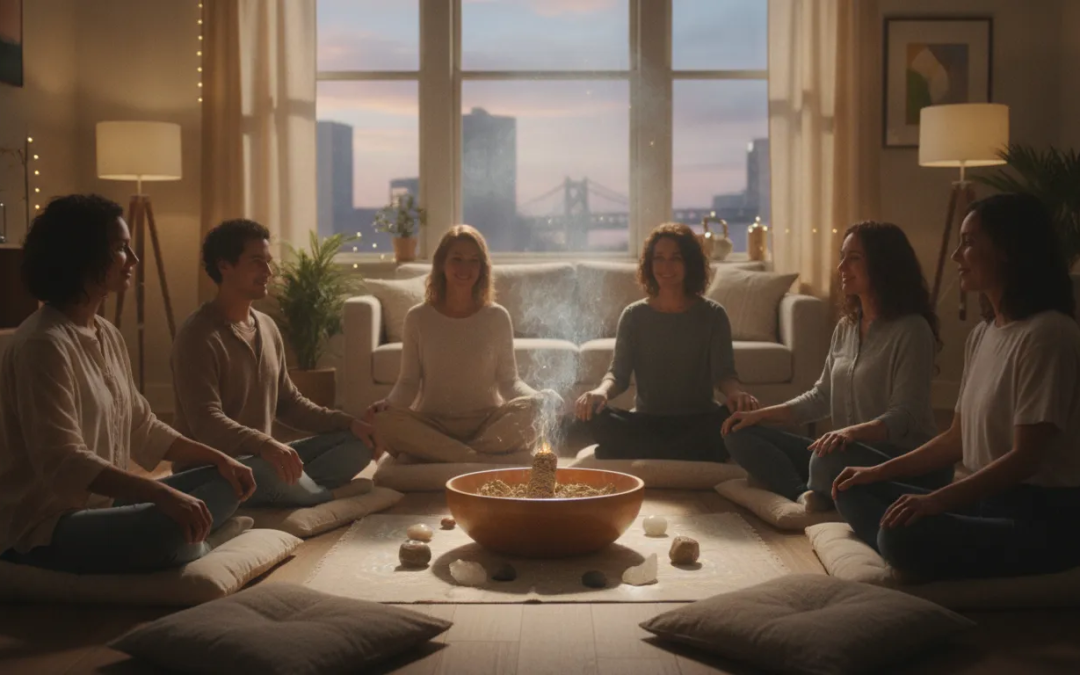
You can feel deeply connected to God and still feel alone in that experience. This is especially true when you are questioning old beliefs, healing from religious conditioning, or trying to find a faith that feels personal rather than imposed.
A virtual spiritual awakening circle is a guided online space where people gather for honest conversation, reflection, and mutual support as they grow in their relationship with God. It is not a class, church service, or therapy session. It is a safe container where you can listen, share what is real for you. And discover that you do not have to perform or have everything figured out.
Because the circle is virtual, you can connect with people beyond your local area who understand the questions you are carrying. The group does not give you a list of rules to follow. Instead, it creates room for insight, encouragement, and a more loving way of listening to your own spiritual life. That starts with understanding what this kind of circle is, and what it is not.
Explore a supportive Spiritual Awakening Circle
What Is a Virtual Spiritual Awakening Circle?
A virtual spiritual awakening circle is a facilitated group container for spiritual growth, honest conversation, and mutual support. You come together with other people who are exploring a more personal relationship with God, often after feeling disconnected from traditional religious settings or unsure where you belong.
The word container matters. It means the circle creates a clear, supportive space where you can slow down, listen inwardly, and speak about what is real for you. You do not have to perform, sound certain, or arrive with everything figured out. Group support can provide a safe setting for vulnerable spiritual deconstruction and shared growth. The circle’s purpose is connection and personal awakening, not proving that you have the right answers.
A space for a direct relationship with God
A spiritual awakening circle does not place institutional rules or dogmatic teachings at the center of your spiritual life. Instead, it supports a direct, personal relationship with God. That can be especially meaningful if you are questioning old beliefs, healing from religious conditioning, or trying to separate genuine faith from fear and obligation.
This does not mean everyone in the group has the same story or uses the same language for their experience. It means the group can make room for honest questions and personal insight. You are invited to notice what brings you closer to love, truth, and a deeper sense of connection with God.
What it is not
A virtual spiritual awakening circle is not a therapy session or a substitute for mental-health care. It is a peer-led or group-based space for connection, sharing, and personal growth rather than a structured clinical setting. If you need clinical support, a licensed mental-health professional is the appropriate resource.
It is also not a class, lecture, or one-way presentation where an expert does all the talking. The value comes from facilitated connection, open conversation, vulnerability, and mutual support. You listen to other people’s experiences, share what feels appropriate for you. And may discover that questions you thought were yours alone are part of a wider human search.
Because the circle is virtual, it can connect people across geography, including those who feel isolated or cannot find like-minded spiritual community nearby. The format creates room for belonging without requiring you to return to a setting that no longer fits. From that foundation, it becomes easier to explore how a circle actually unfolds and what you might experience when you join one.
How Does an Online Awakening Circle Work?
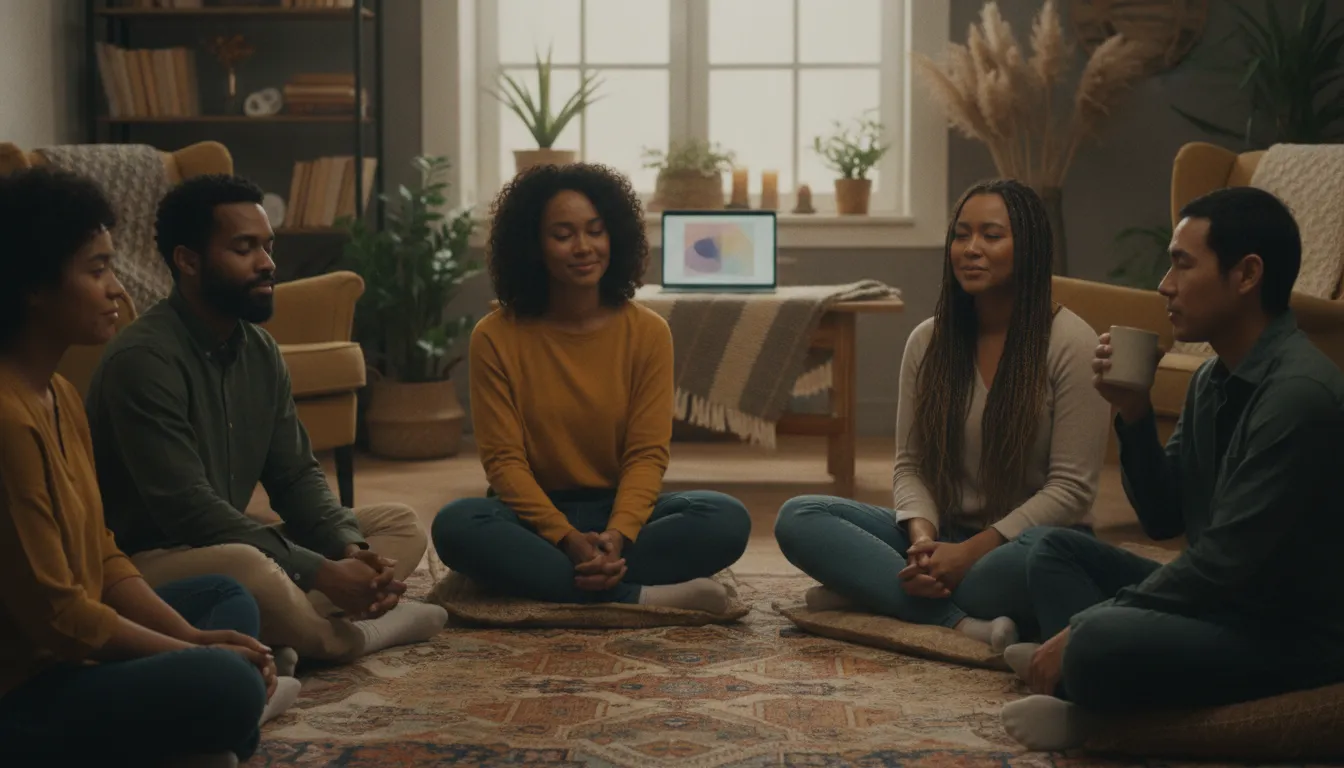
A virtual spiritual awakening circle is not a class where you sit quietly while someone gives you the answers. It is a guided, shared space for connection, honest conversation, and personal growth. The exact flow can vary, but the purpose stays steady: to help you listen more deeply to what is happening within you and to your relationship with God.
You do not have to perform, use the right words, or arrive with a polished spiritual story. The circle is meant to be a safe container for vulnerability and shared growth, especially when you are questioning old beliefs or moving through a season of change. Here is one example of what the experience may include.
- Arrive and become present. You begin by stepping away from the noise of the day and arriving as you are. That may mean taking a few quiet breaths, noticing what you are feeling, or simply allowing yourself to be fully present with the people in the circle. There is no need to force peace or pretend that everything is fine.
- Ground yourself through an opening practice. A facilitator may offer a simple grounding moment, prayer, meditation, or invitation to connect with God. The practice is not a test and does not depend on a particular ritual. It creates a gentle transition from your daily responsibilities into a space where you can pay attention to your inner life.
- Explore a guided reflection or prompt. The group may receive a question or theme related to spiritual awakening, trust, healing, purpose, or listening for guidance. A prompt gives you somewhere to begin without telling you what you are supposed to believe. It can help you notice a feeling, memory, fear, desire, or quiet insight that deserves your attention.
- Share and listen without judgment. Members may take turns sharing what surfaced for them. You can speak honestly while respecting the privacy and experience of others, and you can also listen without needing to fix anyone’s life. Shared vulnerability and open conversation can create mutual support and a deeper understanding of your own journey. A circle is about connection, not debate or spiritual performance.
- Make space for personal reflection. After listening to others, you may take a moment to consider what you want to carry forward. Perhaps one person’s story helps you see an old belief differently. Perhaps you recognize that God feels closer when you stop trying to earn approval. You are allowed to take what is useful and leave what does not fit.
- Close with intention. The circle may end with quiet reflection, a final question, or an invitation to notice how you want to live the insight in the days ahead. The goal is not to create a dramatic moment or promise an instant transformation. It is to leave with greater honesty, a little more support, and a clearer sense of your next step.
This kind of structure gives a virtual spiritual awakening circle enough shape to feel supportive while leaving room for real life. You can be curious, uncertain, hopeful, or still healing. You do not have to have everything figured out before you begin.
Why Can Virtual Community Help You Feel Less Alone?
Spiritual change can feel lonely when the people around you do not understand what is happening inside you. You may still believe in God, yet no longer feel at home in the religious spaces you once knew. You may have questions, doubts, or new desires that are difficult to explain to family and friends.
A virtual circle can give those questions somewhere to land. Because it is online, you are not limited to the people who happen to live near you. A virtual spiritual awakening circle can connect you with seekers across cities, states, or even countries who are exploring a more personal relationship with God. That wider reach matters when your local environment feels unfamiliar or unsupportive.
You Find Belonging Without Having to Pretend
Belonging does not mean agreeing with everyone or performing the right version of faith. It can mean being heard by people who understand why leaving old beliefs behind may bring both relief and grief. In a supportive group, you can speak honestly about feeling stuck, unfulfilled, afraid, or unsure without having to defend every part of your experience.
This can be especially meaningful after religious conditioning has taught you to question your worth or fear God’s judgment. Shared conversation may help you notice that you are not the only person rebuilding trust, releasing old expectations, or searching for deeper meaning. The goal is not to force a conclusion. It is to make room for an honest next step.
If your spiritual transition is connected to Catholic conditioning, you may also find it helpful to read about support groups for ex-Catholic women. Seeing your experience reflected in others can reduce the pressure to navigate it in complete isolation.
Other Perspectives Can Open New Possibilities
When you carry a question alone, your first interpretation can begin to feel like the only interpretation. Listening to another person’s story does not tell you what to believe, but it can widen the view. Someone else’s experience may offer language for something you have felt, a gentler way to understand a setback. Or a reminder that spiritual growth does not follow one straight path.
That exchange can create perspective and mutual support. You share what you are learning, listen to what others are discovering, and decide what resonates with your own relationship with God. The connection is real even though the group meets through a screen, and the online format can remove practical and geographic barriers that keep people from finding community.
For a deeper look at rebuilding a personal spiritual life after religious change, explore this guide to spiritual healing after leaving the church. A circle is not a promise of guaranteed healing, and it is not a replacement for professional care when you need it. It is one possible place to be witnessed, gain perspective, and remember that you do not have to figure everything out alone.
Is a Spiritual Awakening Circle the Same as Therapy?
No. A spiritual awakening circle and therapy can both offer support, but they serve different purposes. A circle is a community-based space for shared experience, spiritual reflection, and mutual encouragement. Therapy is professional mental-health care with a clinical purpose and a defined provider-client relationship.
In a virtual spiritual awakening circle, you may talk about what you are questioning. What you are learning about yourself, or how you want to experience a more personal relationship with God. The emphasis is connection rather than diagnosis. You are not expected to perform, defend a belief system, or have every answer. The group can offer a safe container for vulnerable sharing and personal growth, especially when you have felt alone in your spiritual journey.
| Spiritual awakening circle | Therapy |
|---|---|
| Community-based sharing and mutual support. | Clinical mental-health care from a qualified professional. |
| Explores spiritual questions, lived experience, and connection. | Assesses concerns and uses therapeutic methods within a care plan. |
| Offers perspective and belonging through shared conversation. | Provides professional support for mental-health needs and symptoms. |
Why the distinction matters
It is possible to value spiritual community without asking it to do a therapist’s job. A circle may help you hear another person’s story, name a fear, or see your faith transition with more compassion. It may also help you feel less isolated. Those are meaningful forms of support, but they are not the same as clinical treatment.
Research on some peer-led, community-based interventions that include spirituality has found improvements in measures such as social support and spiritual wellbeing. That research does not mean every circle produces the same results, and it should not be used to make clinical promises about this one. The most honest description is simple: a circle can be one supportive part of a larger path.
Can you use both?
Often, these supports can exist side by side. You might work with a licensed mental-health professional for anxiety, depression, trauma symptoms, or another concern while also participating in a circle for companionship and spiritual conversation. If you are in crisis, feel unsafe, or need help with a mental-health condition, seek professional care rather than relying on a group alone.
You do not have to choose between caring for your mental health and seeking spiritual connection. Knowing the role and limits of each support helps you choose what is right for this season.
Who Might Benefit From a Virtual Spiritual Awakening Circle?
You may be a good fit if your spiritual life feels real to you, but the old ways of talking about faith no longer feel like home. Perhaps you identify as spiritual but not religious. You still want a personal relationship with God, yet you do not want to return to rules. Pressure, or a system that asks you to ignore your own questions.
If you are healing from religious conditioning
Some people come to this kind of circle after years of feeling unworthy. Afraid of judgment, or unsure whether they are allowed to trust their own experience of God. This can be especially true for women healing from Catholic conditioning or another religious background that shaped how they understood guilt, obedience, and belonging. You do not have to attack your past in order to grow beyond what no longer serves you. You can look honestly at what you learned, keep what feels life-giving, and make room for a more loving connection.
A supportive group can give you language for experiences that once felt private or confusing. Hearing another person describe a similar struggle may help you recognize that feeling stuck does not mean you have failed. It may mean you are in the middle of a meaningful transition. If this part of the journey speaks to you, you may also want to read about spiritual healing after leaving the church.
If you want community without giving up your direct relationship with God
You may want companionship, but not another institution telling you what to believe. Awakening circles center on open conversation, shared vulnerability, and mutual support. The emphasis is on your direct relationship with God, not on performing perfectly or agreeing with every person in the room. You can listen, reflect, and share at a pace that respects where you are.
The virtual format may also matter. If the people around you do not understand your spiritual questions, an online group can connect you with seekers beyond your immediate area. That wider community can help you feel less alone while you explore what faith means now. It can offer perspective without requiring you to pretend that you have everything figured out.
If you feel ready for a next step
You do not need to arrive with a polished testimony, a clear plan, or a perfect understanding of your beliefs. You only need an honest desire to grow, connect, and know God more personally. If you are rebuilding trust after a difficult religious experience, learn more about how to rebuild faith after religious trauma.
A circle is not the right fit for everyone, and it is not therapy or a replacement for mental-health care. But if you are seeking gentle community around an unfolding relationship with God, it may be a meaningful place to begin.
Talk with Mark about the Spiritual Awakening Circle
Frequently Asked Questions
What is a virtual spiritual awakening circle?
A virtual spiritual awakening circle is an online space where people explore their relationship with God, their inner life, and their next season of growth together. It offers guided reflection, honest sharing, and mutual support without requiring a particular denomination, belief system, or level of spiritual experience.
How does a spiritual awakening sharing circle work?
The group typically gathers around a theme or reflection prompt. You have space to listen, share what is true for you, and consider a new perspective. The purpose is not to perform, debate, or find the perfect answer. It is to notice what is unfolding in your life with the support of others.
Are spiritual awakening circles the same as therapy?
No. A circle is a spiritual community and support experience, not clinical therapy, counseling, or a replacement for mental-health care. It can give you connection and a place to reflect, while a licensed mental-health professional is the right resource for diagnosis or treatment.
How can an online spiritual community support my awakening?
An online community can help you feel less alone, especially when people around you do not understand what you are experiencing. Hearing different stories may give you language for your own journey, while being witnessed with care can strengthen your sense of belonging and courage.
Where can I find like-minded people to discuss spirituality?
Look for online spiritual communities, facilitated sharing circles, and local groups that welcome honest questions rather than enforcing doctrine. Choose a space that respects your boundaries, allows different perspectives, and supports a direct, personal relationship with God.
What happens in a spiritual living circle?
You may begin with a moment of grounding or quiet reflection, followed by a guided question, personal sharing, and attentive listening. The group may close by reflecting on what each person is taking with them. The exact format can vary, but the heart of the experience is connection, presence, and mutual support.
Ready to Explore the Spiritual Awakening Circle?
You do not have to sort through every question about your spiritual path alone. A supportive circle can give you room to reflect, listen, and feel understood while you continue building a personal relationship with God.
Explore the Spiritual Awakening Circle and take a gentle next step