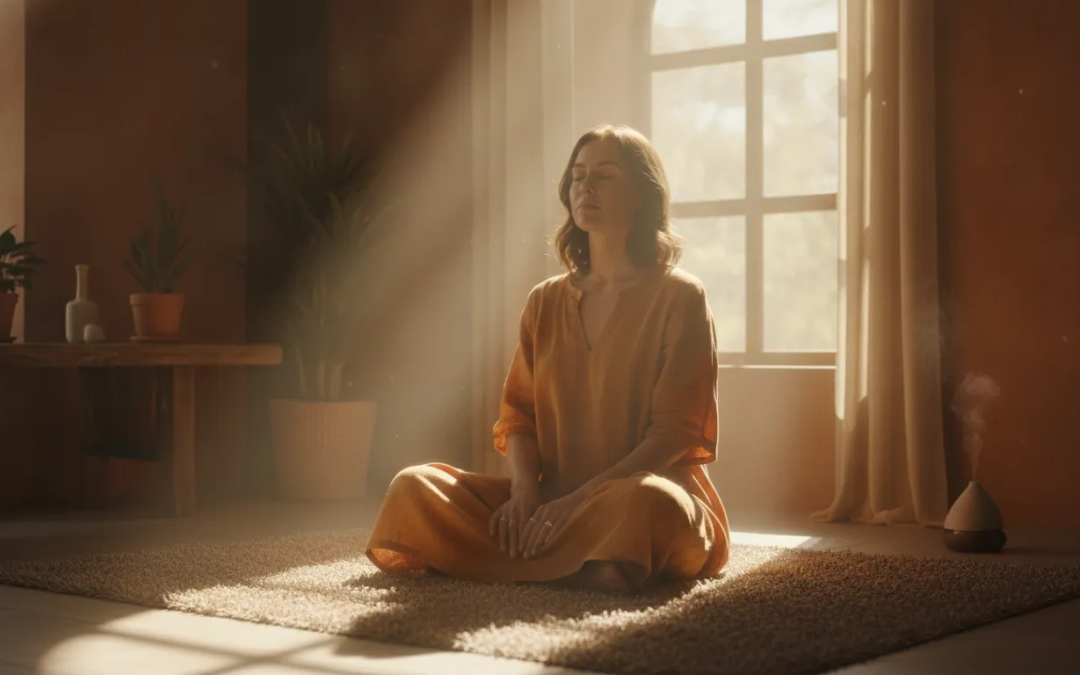
True peace does not come from trying harder to follow religious rules or checking church boxes.
The practice of spiritual meditation focuses on developing a direct connection with God through silent presence rather than religious dogma or structured church rituals. Unlike secular mindfulness, which helps you observe your thoughts to reduce daily stress, this sacred practice is about consenting to the divine presence and listening for inner guidance. A 2017 study reviewed by Healthline confirms that spiritual meditation helps individuals develop a deeper understanding of spiritual meaning and form a stronger bond with a higher power. By sitting in stillness, you let go of mental chatter, release old fear-based beliefs, and begin to experience God as a source of pure love and intimacy.
You do not need to struggle with complex theology to feel the presence of the Divine. To help you start this comforting practice at home, let us look at our first key question: What Is Spiritual Meditation?
What Is Spiritual Meditation?
At its heart, spiritual meditation is a gentle practice of turning inward to find a deep connection with a higher power. God, the Universe, or your own Highest Self. While secular mindfulness helps you focus on the present moment to reduce stress, this practice goes a step further. It invites you into a sacred space where you can experience the divine. According to a study published in the Journal of Religion and Health in 2017, spiritual meditation focuses on developing a deeper understanding of spiritual meaning and building a real connection with a higher power.
This is not about checking religious boxes or following strict dogmas. Instead, it is about creating a quiet, personal relationship with God. In this stillness, you learn to let go of the noise of the world. You begin to listen to the gentle whisper of truth within your own soul. Engaging in spiritual practices like meditation allows you to heal from past religious trauma. It helps you move from fear to a place of perfect love.
A Rich Tapestry of Sacred Traditions
This path to inner stillness is not new. For thousands of years, people across different cultures have used silent contemplation to meet the divine. In Hindu traditions, the practice of japa involves the rhythmic repetition of a sacred mantra or name of God to quiet the mind. Sufi mystics use dhikr, a practice of remembering God through chant and breath, to open the heart. In the Jewish tradition, kabbalistic practices use deep meditation on sacred letters to seek divine truth.
Christian centering prayer is another beautiful example. This method invites you to sit in silence and use a simple sacred word to consent to God’s presence. In his famous book, “The Varieties of Religious Experience” (1902), Harvard professor William James explored how these diverse spiritual experiences show a common human need. We all long to connect with a reality that is far greater than ourselves.
The Core Qualities of a Spiritual Experience
What does spiritual meditation feel like when you practice it? A study published in Frontiers in Psychology in 2019 looked at the core qualities of deep spiritual moments. The researchers found that these experiences often share a few clear traits. People feel a sense of absorption, a beautiful loss of separateness, and a feeling of transcendence. Many also report a deep sense of awe and a quiet peace that words cannot fully describe.
You do not need to be a spiritual master to feel these qualities. They are available to anyone who is willing to sit in quiet surrender. This practice is different from mere physical relaxation. Relaxing might calm your body, but meditation opens your spirit. It takes you past the surface of your daily worries. It plants your feet on the solid ground of divine love.
How Is Spiritual Meditation Different from Secular Mindfulness?
Many people use secular mindfulness to reduce stress or calm a busy mind. But when you want to connect with God, you need something deeper. Secular mindfulness is a mental method to observe your thoughts and stay in the present moment. In contrast, spiritual meditation is an open invitation to enter a relationship with the Divine.
Intention Versus Attention
In secular mindfulness, you train your mind to focus on your breath or your body. The goal is to keep your attention on what is happening right now. But the Centering Prayer tradition offers a different path. In this style of spiritual meditation, your main focus is on your intention, not your attention.
You do not need to fight your thoughts or force your mind to stay still. Instead, you use a simple practice to consent to God’s presence and action within you. You use a meditation to invite divine guidance by simply choosing to be open to Spirit. It is not about perfect focus, it is about a willing heart.
Technique Versus Direct Relationship
Mindfulness functions as a mental tool to help you cope with daily life. It is useful, but it does not look beyond your own mind. Spiritual meditation takes you past the self to meet a higher power. It is a space where you can let go of the pressure to perform and simply rest in love.
This silent rest has a deep scriptural foundation. In Psalm 46:10, the Bible guides us to “Be still, and know that I am God.” Secular practices teach you to observe your thoughts. But spiritual meditation invites you to meet the Creator who lives within those quiet spaces.
| Feature | Secular Mindfulness | Spiritual Meditation |
|---|---|---|
| Core Goal | Calm the mind and stay in the present moment | Consent to God’s presence and action within |
| Primary Focus | Attention on breath, body, or thoughts | Intention to connect with the Divine |
| Role of Thoughts | Observe and release them to stay mindful | Let them pass as you rest in God’s love |
| The Outcome | Reduced stress, better focus, mental calm | Deeper intimacy with God, inner peace, spiritual healing |
| Relationship to Self | Improves your relationship with your own mind | Opens a sacred dialogue between you and the Creator |
Simple Spiritual Meditation Techniques for Beginners
You do not need any special equipment, years of training, or a quiet monastery to begin. Spiritual meditation is simple enough for anyone to try right now. Here is a gentle, step-by-step practice that you can use to start connecting with God through stillness.
- Find a comfortable position. Sit upright in a chair or on a cushion. Keep your back straight but not stiff. Rest your hands gently on your lap. Close your eyes and take a few slow, deep breaths to let your body settle into the moment.
- Choose a sacred word or phrase. This will be your symbol of intention. Pick a word that helps you feel open to God. Examples include “love,” “peace,” “Abba,” “rest,” or “here I am.” You do not have to force the choice. Let the word find you.
- Introduce the word gently. Silently say your sacred word in your mind as a gentle way of saying, “I am here. And I consent to your presence.” This is not a mantra to repeat over and over. It is a soft reminder of your intention to rest with God.
- Let thoughts come and go. When you notice your mind has wandered, do not fight the thoughts. Simply and gently return to your sacred word. The University of Houston teaches that you should acknowledge your thoughts without reacting to them and then let them pass.
- Close softly. After 10 to 20 minutes, stop saying your sacred word. Sit in silence for another minute or two. Bow your head, say a brief prayer of thanks, or gently stretch before opening your eyes and returning to your day.
For beginners, start with just 5 to 10 minutes once a day. If you find it difficult to sit still, try pairing this practice with meditation and breathwork to help calm your nervous system before you begin. Over time, you can slowly build up to longer periods.
What to Do When Your Mind Wanders During Spiritual Meditation
It is common for your mind to wander during prayer. When you sit in silence, thoughts will rush in. You may think about your chores or feel a sudden itch. Many beginners feel like they are failing when this happens, but a busy mind is a normal part of the process. The goal of silent prayer is not to have a blank mind.
The Purpose of Silent Prayer
True spiritual meditation is about your intent, not your attention. The Trappist monks who developed Centering Prayer teach that we sit to consent to the presence of God. You do not need to think deep thoughts to connect with the divine. In fact, the fourteenth century book The Cloud of Unknowing says that God may well be loved, but not thought. You can find this text preserved through Project Gutenberg. When you let go of the need to think, you make space to love.
How to Handle Distractions
When you notice your mind has wandered, do not get upset. Do not try to fight the thoughts. Instead, use a simple word to bring your focus back. This word is your anchor. You can also use spiritual meditation to quiet fear when old religious guilt tries to disrupt your peace. If you feel physical sensations like an itch, treat them just like thoughts. Notice them, let them go, and gently speak your sacred word in your mind. The act of returning is the practice itself.
The Practice Is the Return
Each time you return to your quiet word, you choose God again. This gentle return is where spiritual growth happens. The Contemplative Society teaches that this method trains us to receive contemplation, as shown on their resource site at contemplative.org. You do not need to do it perfectly. Each drift and return is a small act of trust. Over time, this simple habit will help you rest in divine love without fear.
How Spiritual Meditation Deepens Your Relationship with God
Many people think prayer is a one-way street where they do all the talking. They list their needs, ask for help, and then return to their busy lives. But a real relationship needs both speaking and listening. Silent meditation to connect with God shifts your focus from your own voice to His voice. This practice is not about clearing your mind to make it empty. Instead, it is about making space to listen for the Holy Spirit and feel His quiet presence near you.
Moving from Fear to Pure Love
Growing up with rigid religion can make you feel like God is a harsh judge who watches your every move. This fear-based view makes it hard to feel close to Him. Silent prayer helps you move past these old rules so you can experience a bond built on trust and warmth. By sitting in stillness, you let go of the pressure to perform or check programmatic boxes. You begin to see that you are already loved just as you are, which is the heart of spiritual healing and connection with the Divine.
Discerning God’s Voice from Your Own Fears
When you sit in silence, your mind will still buzz with thoughts, plans, and worries. A major part of the practice is learning how to tell the difference between God’s guidance and your own anxious mind. Your own fear often sounds loud, urgent, and critical. In contrast, the voice of the Holy Spirit is gentle, peaceful, and patient. Consistent quiet time helps you build this inner discernment. Over time, you learn to ignore the noisy doubts of your ego so you can hear the soft truth that God speaks to your soul.
Finding God in the Sheer Silence
The Bible shows us that God often chooses to speak when we are completely still. In the book of Kings, the prophet Elijah did not find God in the strong wind, the loud earthquake, or the bright fire. Instead, he found the Divine presence in the sound of sheer silence, as noted in 1 Kings 19:12. The 14th-century mystic Meister Eckhart echoed this truth when he wrote that nothing describes God as well as silence. When you stop chasing words, you step into a deeper way of knowing God that goes far beyond human speech.
Creating Space for Healing and Truth
Making a daily habit of quiet prayer does more than just calm your mind. It opens up the deep spaces in your heart where God can reveal old wounds and begin to heal them. In the quiet, you do not have to hide your pain, your doubts, or your secrets. You simply consent to be with God. As you rest in this space, you will start to see the patterns that keep you stuck. Are you ready to explore how this quiet practice can help you grow? For those who want to build a deep, personal walk with the Divine, you can go deeper with the God Immersion Program.
Questions for Personal Reflection
To help you bring this silent practice into your daily life, take a few moments to think about these questions:
- How often do you sit in complete silence with God without asking for anything?
- What fears or doubts start to get loud when you try to quiet your mind?
- How might your life change if you trusted that God wants to connect with you through love rather than judgment?
How Often Should You Practice Spiritual Meditation?
There is no single rule about how long or how often you should sit in silence. The most important part is to show up consistently. The Centering Prayer tradition recommends practicing twice a day for twenty minutes. However, you do not need to aim for this goal right away. Even five minutes of daily stillness can create a meaningful shift in your spiritual life.
Think of it like building any new relationship. You would not try to have a single eight-hour conversation with a new friend and call it done. You show up, listen, and spend small amounts of quality time together. The same is true for your relationship with God. Luke 5:16 shares that even Jesus frequently withdrew to lonely places to pray. If the Son of God needed regular time in silence, how much more do we?
A Simple Progression for Beginners
If you are just starting out, do not pressure yourself to sit for long periods. Begin with a goal that feels easy: five minutes once a day. Once that feels comfortable, try ten minutes. After a few weeks, you can work your way up to fifteen or twenty minutes. Morning is a wonderful time to meditate because the mind is fresh and the day has not yet filled with distractions. Evening meditation can help you release the worries of the day before sleep.
Spiritual meditation is not another obligation to get right. It is not a box to check or a spiritual scorecard. It is an invitation to show up, be still, and let God love you. Consistency is far more important than duration. Five minutes of sincere stillness every day will transform your spiritual life far more than an hour once a month.
Frequently Asked Questions
How do you do spiritual meditation?
You can begin by sitting in a quiet place. Choose a word that honors God, such as “love” or “peace.” Close your eyes and focus on your desire to connect with the divine. When thoughts come, do not fight them. Use your word to gently return to silence. The University of Houston outlines a simple practice of sitting comfortably, letting go of thoughts, and repeating a meaningful prayer or phrase.
What does it mean to spiritually meditate?
To spiritually meditate is to connect with a power higher than yourself. It is not about clearing your mind or observing thoughts. Instead, you consent to God’s presence. A Healthline review of a 2017 study shows that spiritual meditation focuses on finding a deeper connection with a higher power. It helps you build a real relationship with God through silence, rather than religious rules.
How is spiritual meditation different from mindfulness?
Secular mindfulness helps you focus on the present moment and reduce stress. It does not look for a connection with God. Spiritual meditation has a different goal. The Contemplative Society explains that methods like Centering Prayer focus on intention rather than attention. You are not just watching your thoughts. You are choosing to rest in the loving presence of God.
How often should a beginner practice spiritual meditation?
As a beginner, you should start with small steps. Try to meditate for ten to fifteen minutes once a day. You can slowly build up to twenty minutes. The Centering Prayer tradition recommends practicing twice daily for twenty minutes. The most important part is to show up every day. Consistency matters more than the length of time you spend in silence.
Ready to Experience Stillness and Connect with God?
Sitting in silence can feel uncomfortable when you are used to the constant noise of busy days. If you keep waiting for the perfect time or try to carry the heavy weight of worry on your own. You miss the quiet peace that is already waiting inside you. You do not have to live with a busy mind or a restless heart when you can choose to rest in divine love right now.
Ready to book a 1:1 spiritual healing session? You can book a 1:1 spiritual healing session with Mark today to help you quiet your fear, release old religious conditioning, and learn to trust the gentle guidance of your own soul.